




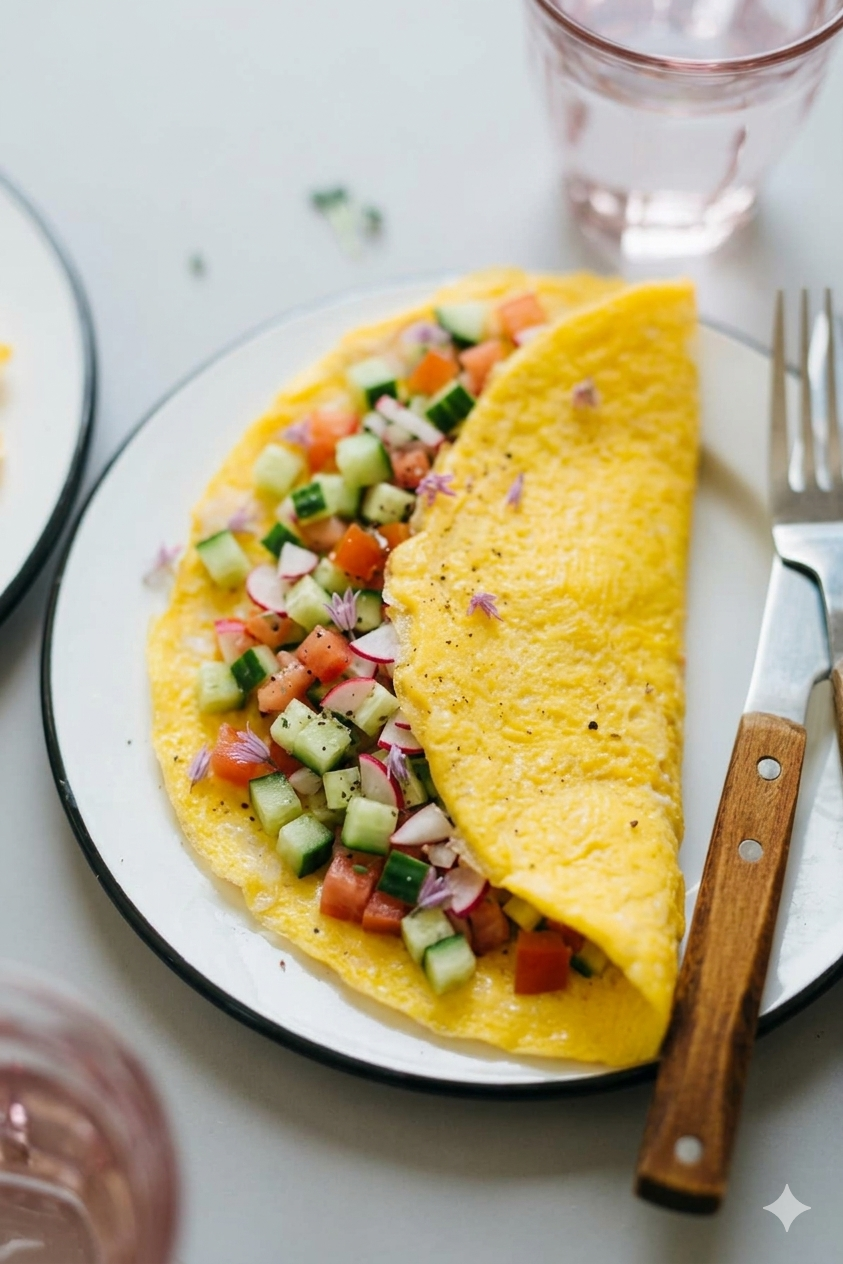
The classic French omelet—made simply with whisked eggs, a pinch of salt, and a touch of butter or oil—is one of the most versatile, lightning-fast dishes in culinary history. Whether you are throwing together a quick morning breakfast or looking for a light, deeply satisfying dinner, the omelet serves as a perfect blank canvas.
By folding in a thoughtful combination of fresh vegetables, melted cheeses, proteins, or even sweet dessert toppings, you can elevate a humble egg dish into a truly gourmet meal. Here is an original collection of international filling ideas, unique flavor profiles, and a foolproof technique guide to achieving that coveted, pillow-soft texture.
Table of Contents
1. Global Flavor Profiles to Transform Your Eggs
The Japanese Omurice (Tomato & Vegetable Fried Rice)
A massive comfort food staple in Japan, this fusion dish wraps a hearty portion of savory, seasoned grains inside a smooth, delicate egg blanket.
- The Filling: Leftover jasmine or short-grain rice stir-fried in a hot skillet with finely diced carrots, peas, onions, and a rich savory-sweet tomato glaze or ketchup base. Fold the finished omelet neatly over the warm mound of rice before serving.
The Mediterranean Greek Isles Omelet
Bring bright, sun-drenched coastal flavors to your plate with an ingredient combination that balances creamy fats with sharp, briny accents.
- The Filling: Crumbled authentic sheep’s milk feta cheese, sliced Kalamata olives, finely ringed red onions, and juicy, sun-ripened diced tomatoes.
The Ultimate Western Spicy Chorizo & Avocado Build
For those who crave bold heat and a hearty, smoky profile to kickstart their morning or liven up an evening.
- The Filling: Crumbly, pan-seared spicy chorizo sausage (or seasoned ground beef) paired with melted pepper jack cheese, fire-roasted green chilies, and cool, buttery slices of fresh avocado to cut through the heat.
Omelet Filling Matrix: 8 Creative Combinations
The beauty of cooking with eggs is their ability to pair beautifully with nearly any ingredient in your refrigerator. Use this mix-and-match matrix to inspire your next kitchen creation:
| Style Name | Protein Element | Veggie Component | Cheese / Cream Component |
|---|---|---|---|
| The Green Harvest | Crispy smoked bacon | Fresh baby spinach | Rich cream cheese |
| The Coastal Brunch | Succulent prawns | Tender green asparagus | Sharp white cheddar |
| The Iberian Green | Cured Spanish chorizo | Sautéed spinach | Grated Manchego cheese |
| The Bistro Classic | Smoked salmon | Steamed asparagus | Tangy goat cheese or chèvre |
| The Earthy Crunch | Toasted walnuts/pine nuts | Wilted spinach | Creamy herbed ricotta |
| The Garden Umami | Diced ham | Mutilated garlic mushrooms | Mild melted mozzarella |
| The Crisp Radish | Optional proscuitto | Peppery roasted radishes | Fluffy whipped ricotta |
| The Tex-Mex Melt | Spicy chorizo | Diced tomatoes & chilies | Sharp Monterey Jack |
Export to Sheets
2. Thinking Outside the Box: The Chocolate Dessert Omelet
Eggs are not strictly reserved for savory meals. With a few simple tweaks, an omelet transforms into a decadent, high-protein dessert or a special weekend treat that mimics a delicate French crepe.
[The Sweet Omelet Process]
Whisk Eggs + Cocoa + Sugar ---> Melted Chocolate Swirl ---> Cook in Butter ---> Stuff with Fresh Berries
- The Batter: Whisk fresh eggs with a tablespoon of unsweetened cocoa powder, a touch of cane sugar, and a small splash of heavy cream. For deep flavor, fold a tablespoon of cooled, melted dark chocolate directly into the egg mixture.
- The Finish: Cook gently in a buttered pan over medium-low heat. Just before folding, stuff the center with freshly sliced strawberries, ripe banana rounds, or a handful of dark chocolate chips. Serve warm, crowned with a scoop of vanilla bean ice cream or a dust of powdered sugar.
3. Technique Focus: How to Achieve an Ultra-Fluffy, Pillow-Soft Texture
The secret to a world-class omelet lies entirely in how you handle the eggs before they ever touch the hot pan. To completely avoid a flat, rubbery texture, practice these structural techniques:
- The Aeration Method: Instead of a lazy fork-mix, use a balloon whisk to vigorously beat your eggs for a full two minutes before cooking. This incorporates millions of tiny micro-bubbles into the liquid, causing the eggs to expand beautifully upon contact with heat.
- The Soufflé Method: For the ultimate cloud-like experience, separate your egg whites from the yemas (yolks). Whip the whites in a clean bowl until soft peaks form, gently beat the yolks in a separate dish with your salt, and then use a rubber spatula to carefully fold the whipped whites back into the yolks, preserving the trapped air.

A Crucial Rule on Condiment Assembly
- Raw Additions: Soft or pre-cooked ingredients—such as smoked salmon, fresh arugula, avocado, or deli ham—should be added to the center of the egg pool completely raw, allowing the residual heat of the folding process to warm them gently.
- Sautéed Additions: High-moisture or fibrous ingredients—such as wild mushrooms, green asparagus spears, raw onions, or bacon—must be fully sautéed in a separate skillet beforehand. Adding them raw will release excess water into the omelet, ruining its delicate, velvety structure.
Conclusion
The filled omelet is a testament to the power of simple, high-quality home cooking. By mastering basic aeration techniques and playing with international flavor combinations—whether you lean toward a classic French salmon and goat cheese pairing, a savory Japanese rice wrap, or a surprising chocolate dessert variation—you can transform basic pantry staples into an impressive, gourmet meal in under ten minutes.