

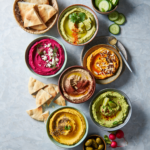


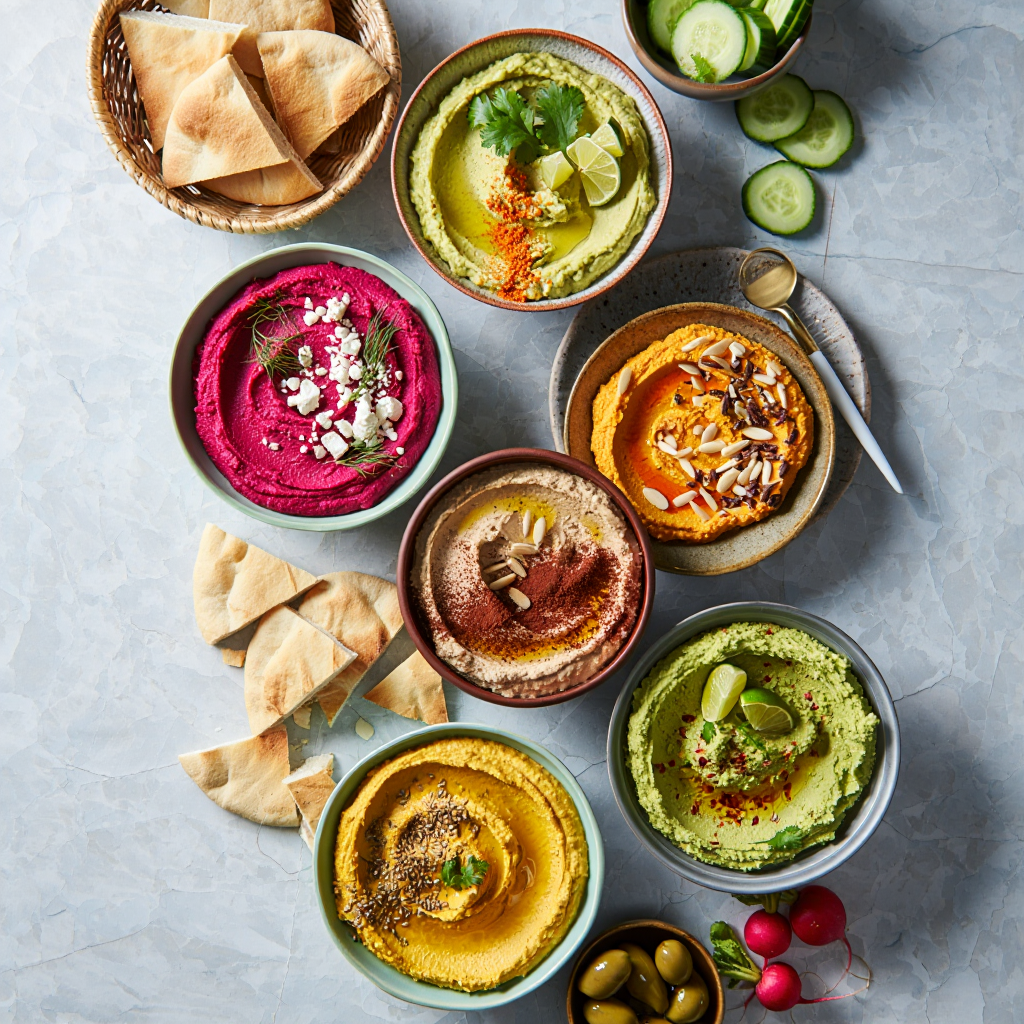
Hummus is an absolute staple of Middle Eastern cuisine, traditionally crafted from a smooth blend of cooked chickpeas, tahini, fresh garlic, and bright lemon juice. Not only is it exceptionally healthy, packed with plant-based protein and clean fats, but it also serves as a brilliant blank canvas for creative cooking.
If you are looking to bring a burst of color and fresh flavor profiles to your table, moving past the classic recipe opens up a world of culinary options. Here are five unique, delicious variations of homemade hummus, followed by a foolproof guide to mastering the classic foundation.
Table of Contents
5 Creative Variations to Try Today
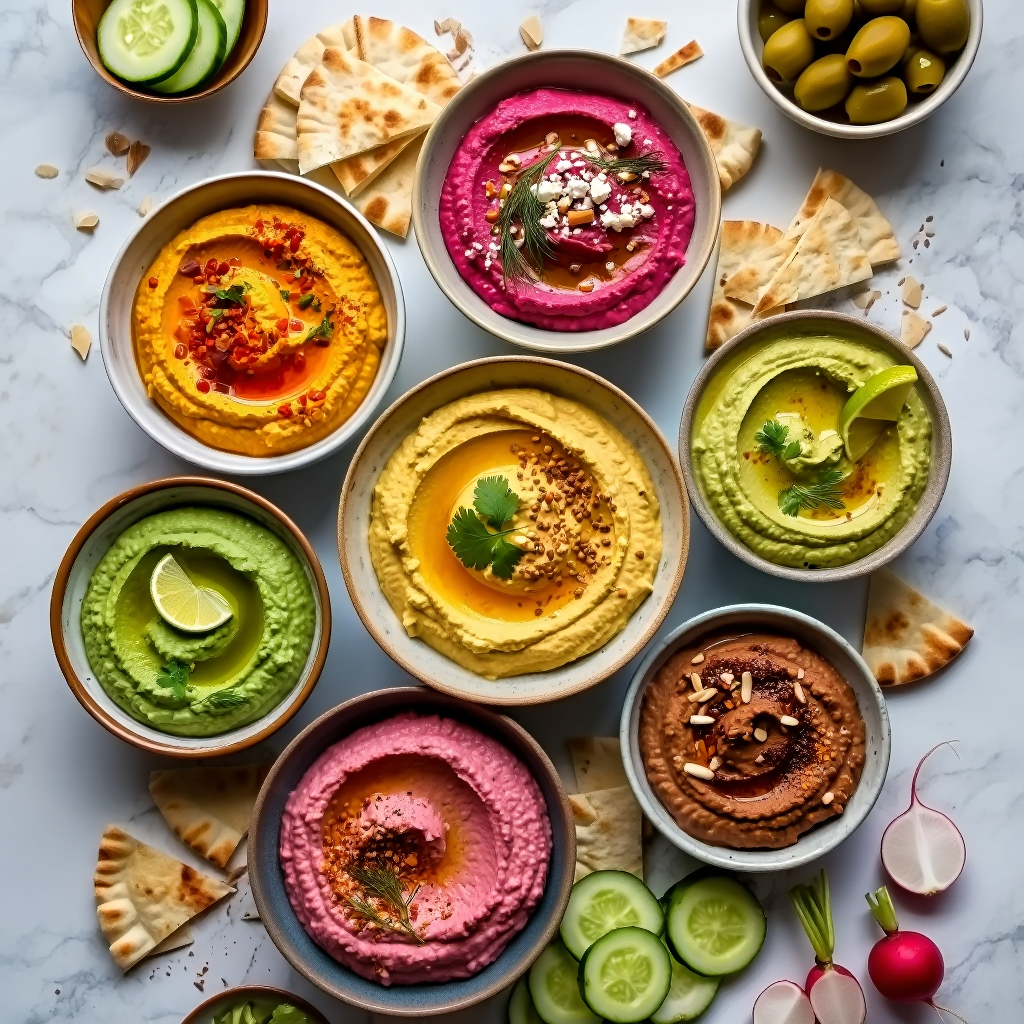
1. Roasted Pumpkin or Carrot Hummus
Adding roasted root vegetables introduces a delicate, natural sweetness that beautifully cuts through the sharp bite of raw garlic and earthy tahini.
- The Build: Incorporate a generous cup of caramelized roasted pumpkin into your blending cycle.
- Alternative: If you don’t have pumpkin on hand, slow-roasted carrots work as a fantastic alternative, yielding a similarly rich, sweet undertone and a gorgeous orange hue.
2. Light and Earthy Cauliflower Hummus
For a lighter spin on the classic dip, swapping out the heavy starches of legumes for a brassica vegetable creates an incredibly smooth, velvety texture.
- The Technique: Completely replace the chickpeas with cauliflower that has been roasted, boiled, or lightly seared in a pan.
- The Upgrades: To ground the flavors, add a generous pinch of cumin powder or a teaspoon of aromatic yellow curry powder. For a balanced compromise, you can also use a 50/50 mix of cauliflower and traditional chickpeas.
3. Vibrant Roasted Beetroot Hummus
If you want to create a stunning visual centerpiece for a party platter, this deep, magenta-colored dip is guaranteed to catch everyone’s attention.
- The Build: Add boiled or roasted beetroot directly into your food processor, slightly reducing the standard quantity of chickpeas. The result is an incredibly earthy, vibrant dip with a subtle, sweet finish.
4. Creamy Zesty Avocado Hummus
This variation marries the velvety, rich qualities of a classic Mexican guacamole with the structured, nutty foundation of a traditional Middle Eastern dip.
- The Quick Blend: Process your standard chickpeas alongside a fully ripe avocado, a pinch of chili powder, fresh lemon juice, a single garlic clove, sea salt, cracked black pepper, and a stream of extra virgin olive oil.
5. Smooth White Bean and Toasted Peanut Hummus
Altering the legume base entirely changes the texture, turning the dip into an ultra-creamy spread that melts on the tongue.
- The Swap: Substitute the traditional chickpeas for soft cannellini beans, great northern white beans, or even pinto beans.
- The Texture Twist: Top the finished spread with a handful of crushed, toasted peanuts to introduce a smoky, savory crunch that complements the creamy beans perfectly.
Master the Foundation: The Authentic Classic Recipe
Before experimenting with colorful variations, it helps to master the traditional ratios that make authentic hummus so smooth and satisfying.
Ingredients
- Cooked Chickpeas: 400g (rinsed and thoroughly drained)
- Garlic: 1 to 2 fresh cloves (adjusted for your taste preference)
- Premium Tahini: 2 to 3 tablespoons (pure sesame paste)
- Ground Cumin: A generous pinch or 1/2 teaspoon
- Extra Virgin Olive Oil: 3 tablespoons (plus more for serving)
- Fresh Lemon: The juice of 1/2 a large lemon
- Water: Roughly 1/2 a cup (chilled, added gradually)
- Seasoning: A pinch of sea salt and cracked black pepper
- Garnish: Sweet smoked paprika and whole chickpeas
Preparation Method
- Prep the Base: Thoroughly rinse your canned or home-cooked chickpeas under cold water. To achieve an ultra-smooth texture, you can quickly pinch off the translucent skins, though this is optional.
- Process: Place the chickpeas, garlic, tahini, cumin, salt, pepper, olive oil, and fresh lemon juice into a high-powered food processor or blender.
- Emulsify: Begin blending the ingredients while slowly drizzling in the chilled water a tablespoon at a time. Watch the texture shift until it becomes completely light, aerated, and creamy.
- Serve: Spread the fresh hummus into a shallow bowl, creating a well in the center using the back of a spoon. Drizzle a generous amount of high-quality olive oil into the well, and dust the top with sweet smoked paprika.
Customization Guide: Mix-and-Match Ingredients
The beauty of homemade hummus is its incredible flexibility. You can alter the ingredients based on whatever you have available in your kitchen.
                  [ Hummus Customization Matrix ]
                                 |
      +--------------------------+--------------------------+
      |                          |                          |
[ Veggie Boosters ]       [ Nutty Crunches ]       [ Legume Swaps ]
• Broccoli Florets        • Toasted Walnuts        • Red Lentils
• Roasted Red Peppers     • Crushed Almonds        • Black Beans
• Sun-Dried Tomatoes      • Pine Nuts              • Broad Beans
- Serving Variations: Use it as a vibrant dipping sauce for warm pita bread, corn tortilla chips, or crunchy raw vegetable sticks (like celery and cucumber). It also functions beautifully as a healthy, creamy alternative to mayonnaise inside wraps, sandwiches, or layered grain bowls.
Proper Storage and Freezing Guidelines
- Refrigeration: Store your leftover hummus in an airtight container in the refrigerator. Because it contains no artificial preservatives, it is best enjoyed within two to three days.
- Freezing Technique: Yes, you can freeze homemade hummus! To prevent it from drying out and losing its signature texture, transfer it to a freezer-safe container and pour a thin, protective layer of extra virgin olive oil over the top surface to lock in the moisture. Thaw completely in the fridge overnight and give it a vigorous stir before serving.
Conclusion
Whether you prefer the natural sweetness of a roasted pumpkin blend, the brilliant magenta pop of a beetroot infusion, or the timeless perfection of the authentic classic, making hummus at home allows for endless kitchen creativity.
By understanding the basic balance of chickpeas, tahini, garlic, and citrus, you can confidently swap ingredients, add unique toppings, and adjust textures to fit any occasion. It is a healthy, vibrant, and incredibly versatile dish that brings both color and incredible flavor to your table, proving that clean eating never has to be boring.