
Argentina has an incredible sweet tooth. Heavily influenced by European immigration and defined by its love affair with dulce de leche, the country’s pastry scene is legendary. From afternoon social hours to national holidays, these ten iconic desserts and sweet bites are essential to understanding Argentine food culture.
Table of Contents
1. Pastafrola (Traditional Lattice Tart)
Originally brought over by Italian immigrants, this classic tart is a permanent fixture on Argentine tea tables, especially during afternoon social hours (la merienda).
- The Foundation: A rich, golden shortcrust pastry base made with flour, eggs, and butter or traditional lard, lightly scented with vanilla.
- The Filling: The crust is loaded with a thick layer of sweet fruit paste—most traditionally quince (dulce de membrillo) or sweet potato (dulce de batata).
- The Look: It is instantly recognizable by its elegant lattice top, made from strips of the same pastry laid out in a clean diamond pattern before baking. It is almost always paired with hot, bitter mate.
2. Balcarce Cake (Tarta Balcarce)
A glorious combination of textures, this decadent cake was invented at the historic París pastry shop in the city of Balcarce, Buenos Aires province.
- The Build: An intense, multi-layered masterpiece featuring sponge cake, smooth dulce de leche, fluffy whipped cream, crunchy pieces of crushed meringue, grated coconut, and walnuts or chopped almonds.
- The Finish: The top is heavily dusted with powdered sugar, which is traditionally seared with a hot branding iron to create a beautiful caramelized pattern.
3. Pastelitos Criollos (Fried Patriotic Pastries)
These crisp, star-shaped fried pastries are deeply tied to Argentina’s history. It is a strict national tradition to eat them on May 25th to celebrate the country’s first steps toward independence, typically following a hearty lunch of traditional savory locro stew.
- The Texture: The pastry dough is meticulously folded into hyper-flaky, puff-pastry layers. When dropped into hot oil, these layers burst open like a flower.
- The Core: Each pastry is stuffed with a cube of firm quince or sweet potato paste. Once fried golden brown, they are glazed in sugar syrup and decorated with colorful sprinkles or granulated sugar.
The Merienda Matching Matrix
In Argentina, sweet treats are grouped by how and when they are enjoyed during the day. Use this quick reference guide to plan your menu layout:
| Dessert / Sweet | Base Material | Star Component | Best Pairing | Serving Context |
|---|---|---|---|---|
| Facturas & Medialunas | Laminated or Brioche Dough | Pastry Cream / Dulce de Leche | Café con Leche / Mate | Breakfast or late afternoon |
| Tortas Fritas | Simple Wheat Dough | Frying Fat / White Sugar | Bitter Hot Mate | Rainy days / Casual gatherings |
| Pastafrola | Citric Shortcrust | Quince or Sweet Potato Paste | Black Coffee / Herbal Tea | Sunday family gatherings |
Export to Sheets
4. Pionono (The Sweet Sponge Roll)
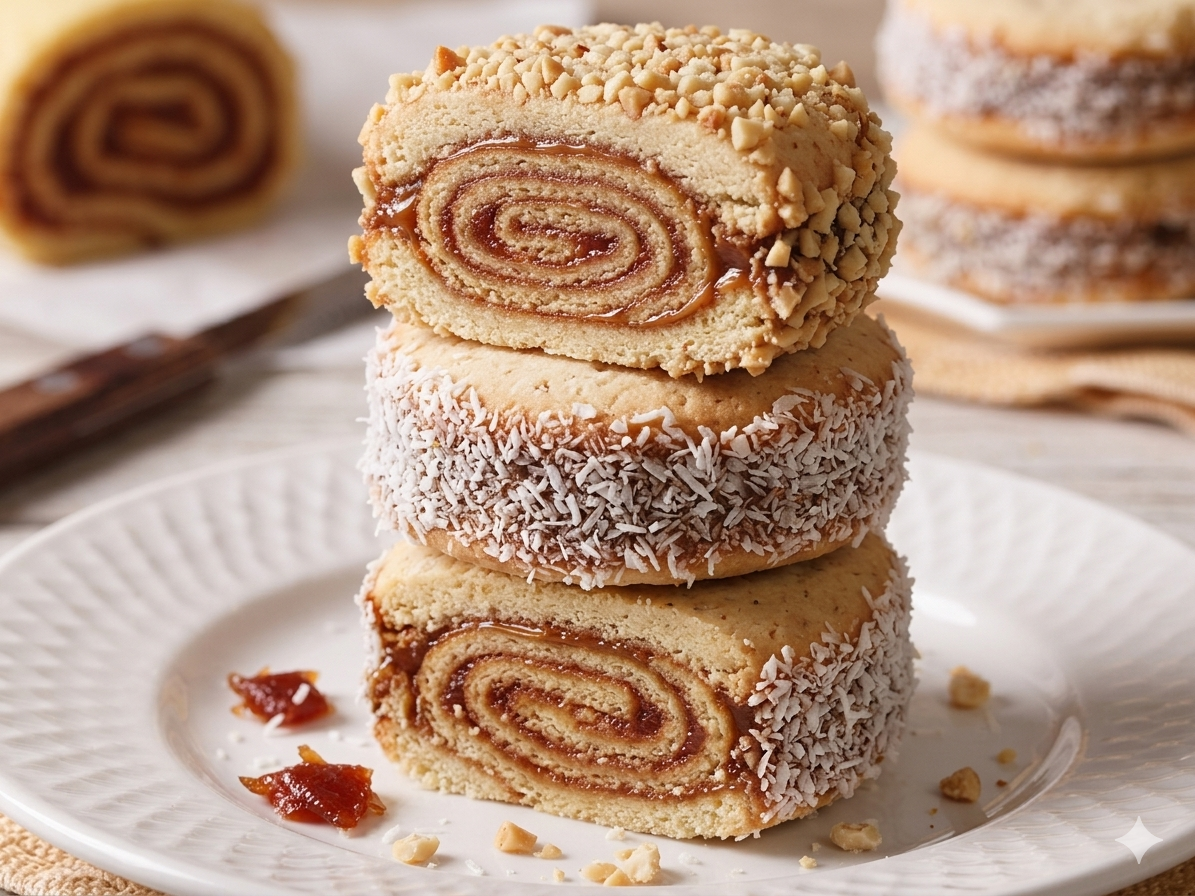
While Spain has its own version, the Argentine pionono is a totally unique staple. It features an incredibly thin, feather-light, and flexible sheet of sponge cake that acts as a canvas for various fillings.
                  [Pionono Cross-Section]
    =================================================  <- Powdered Sugar
     ~~~~~~~~~~~~~~~~~~~~~~~~~~~~~~~~~~~~~~~~~~~~~~~   <- Thin Sponge Layer
      [ DULCE DE LECHE / WHIPPED CREAM FILLING ]
     ~~~~~~~~~~~~~~~~~~~~~~~~~~~~~~~~~~~~~~~~~~~~~~~   <- Thin Sponge Layer
    =================================================  <- Chocolate Drizzle
- The Sweet Build: The sponge sheet is spread edge-to-edge with a rich layer of dulce de leche or flavored whipped cream and then rolled into a tight cylinder.
- The Flexibility: The exterior is finished with chocolate drizzle or a dusting of sugar. Interestingly, piononos are also highly popular in savory variations, rolled with ham, cheese, and olives for holiday appetizer platters.
5. Tortas Fritas (Fried Tea Cakes)
A rustic, comforting treat with deep colonial roots. There is an enduring cultural custom across Argentina to fry up fresh batches of tortas fritas the moment it starts raining outside.
- The Prep: The dough is incredibly straightforward—just wheat flour, yeast, warm water, salt, and a bit of melted animal fat or butter. It is rolled into flat circles, and a small hole is cut in the center to help the dough cook evenly in the hot fat.
- The Serving: They emerge puffed and hot, immediately showered with sugar. While incredible on their own, locals love splitting them open and spreading them with thick dulce de leche during long, rainy afternoon chats.
6. Facturas (Argentine Pastries)
Go into any neighborhood bakery in Argentina, and you will find rows of facturas sold by the dozen. This is the collective name for an expansive family of sweet, individual pastries brought over and adapted from European baking traditions.
                    [The Bakery Showcase]
    +-----------------+-----------------+-----------------+
    |   Medialunas    | Tortitas Negras |   Cañoncitos    |
    | (Sweet/Salty    | (Heavy Layer of | (Flaky Pastry   |
    |   Croissants)   |   Black Sugar)  |  with Dulce de  |
    +-----------------+-----------------+-----------------+
- The Icons: The most famous are medialunas (small croissants that come in a sweet, glazed butter version or a thin, crisp lard version).
- The Varieties: Other favorites include tortitas negras (flat dough rounds baked under a heavy layer of dark brown sugar), cañoncitos (pastry horns stuffed with dulce de leche), and various shapes filled with yellow pastry cream or bright quince paste.
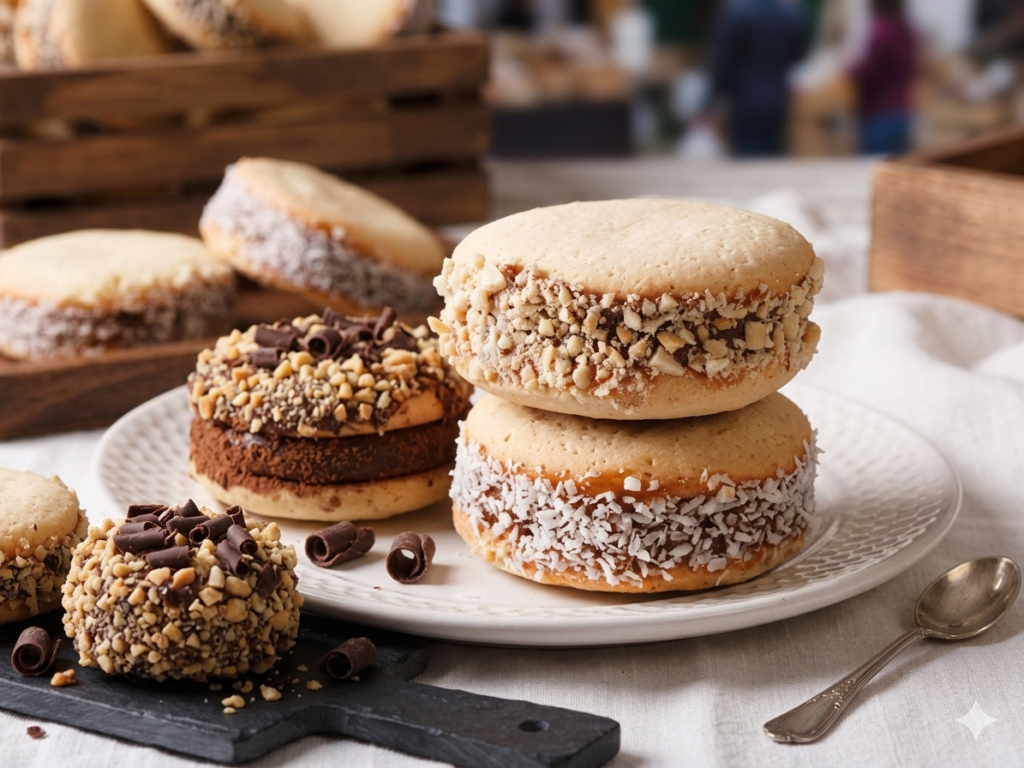
7. Alfajores (The Ultimate Cookie Sandwich)
You cannot talk about Argentine sweets without mentioning the alfajor. It is the absolute king of the country’s snack industry, sold everywhere from premium boutiques to small neighborhood street kiosks.
- The Build: At its core, an alfajor consists of two tender cookies sandwiching a thick layer of dulce de leche or fruit jam. The entire sandwich is then coated in a shell of dark chocolate, white chocolate, or a crisp sugar glaze.
- The Maicena Style: A beloved homemade variation is the alfajor de maicena. The cookie tops are made with cornstarch, giving them a delicate texture that instantly melts in your mouth. The exposed filling around the rim is rolled in grated coconut for a classic finish.
8. Panqueques con Dulce de Leche (Crêpes)
A true icon of traditional neighborhood steakhouse (bodegón) menus. It takes the classic, thin European crepe and transforms it into a decadent dessert.
[The Steakhouse Panqueque Flow]
Fry Thin Batter ---> Slather with Rich Dulce de Leche ---> Roll Tight ---> Caramelize Top with Hot Iron
- The Style: A simple milk, egg, and flour batter is fried paper-thin in a buttered skillet. It is then heavily slathered with dulce de leche and rolled up tightly into a cylinder.
- The Upgrade: In classic diners, chefs will sprinkle the top of the roll with white sugar and sear it with a red-hot iron tool, creating an intense, crispy layer of burnt caramel right before serving.
9. Budín de Pan (Bread Pudding)
The ultimate home-style dessert, born out of a desire to make sure nothing goes to waste in the kitchen.
- The Method: Stale, leftover bread is soaked in milk until soft, then blended with eggs, sugar, butter, and vanilla extract. The mixture is poured into a metal ring mold lined with dark caramel liquid.
- The Bake: It is baked slowly in a water bath (baño María) until firm and chilled for several hours. Restaurants always serve it “mixed” (mixto), meaning it comes with a generous scoop of whipped cream on one side and a dollop of dulce de leche on the other.
10. Helado Artesanal (Artisanal Gelato)
While ice cream is universal, Argentina treats it like an art form. Inherited directly from Italian immigrants, Argentine artisanal helado is celebrated for its incredible scoopability and ultra-creamy texture.
- The Delivery Culture: Ice cream parlors are a staple of social life, staying open late into the night and offering fast home delivery options by the kilo.
- The Flavors: The undisputed champion of the menu is dulce de leche helado. Heladerías create countless variations of this single flavor, loading it up with chocolate chips (granizado), swirling in ribbons of pure fudge, or folding in chunks of chocolate cookies.